Custom manufacturing estimation
One estimation captures setup and cycle time, hourly machine cost, labour, materials, tools, consumables, fixtures, operations, vendor charges and markup.
A unified Odoo platform for complex estimation, quantity-based pricing, multi-stage production, partial work-in-progress movement, outsourced processing, stringent quality control and complete lot traceability.
Prefortune Technologies LLP implemented a comprehensive Odoo-based manufacturing solution for a fabrication and aerospace manufacturer producing highly customised precision components.
The operating model required detailed estimation, multiple pricing quantities, multi-stage manufacturing, controlled partial movement, external processing, strict inspections, engineering documentation, lot traceability and partial customer deliveries.
Standard workflows alone could not support every operational requirement. Odoo's standard applications were therefore combined with carefully designed custom modules and workflow enhancements to create complete enquiry-to-delivery traceability.
The client needed operational flexibility without losing valuation accuracy, traceability, quality evidence or a single source of truth.
Machine, labour, material, tooling, consumable, fixture and subcontracting costs were calculated in spreadsheets.
Each requested quantity required a separate calculation, and quotations were not directly connected to manufacturing preparation.
Partial production could generate multiple manufacturing backorders, complicating planning and work-centre tracking.
Different quantities could not progress independently or bypass an unavailable operation under controlled rules.
External processing was difficult to track and returned processed parts could incorrectly affect stock or valuation.
Raw-material lots, engineering documents, inspections, NCRs and order communications were maintained separately.
Each capability was designed around the actual manufacturing route, with Odoo remaining the central commercial, production, inventory and quality record.
One estimation captures setup and cycle time, hourly machine cost, labour, materials, tools, consumables, fixtures, operations, vendor charges and markup.
The same approved estimate produces cost, selling price, gross profit and margin for quantities such as 50, 100 and 500 units.
Credit approval, quality clearance, material availability, purchasing, receipt, incoming inspection and documentation are validated before shop-floor release.
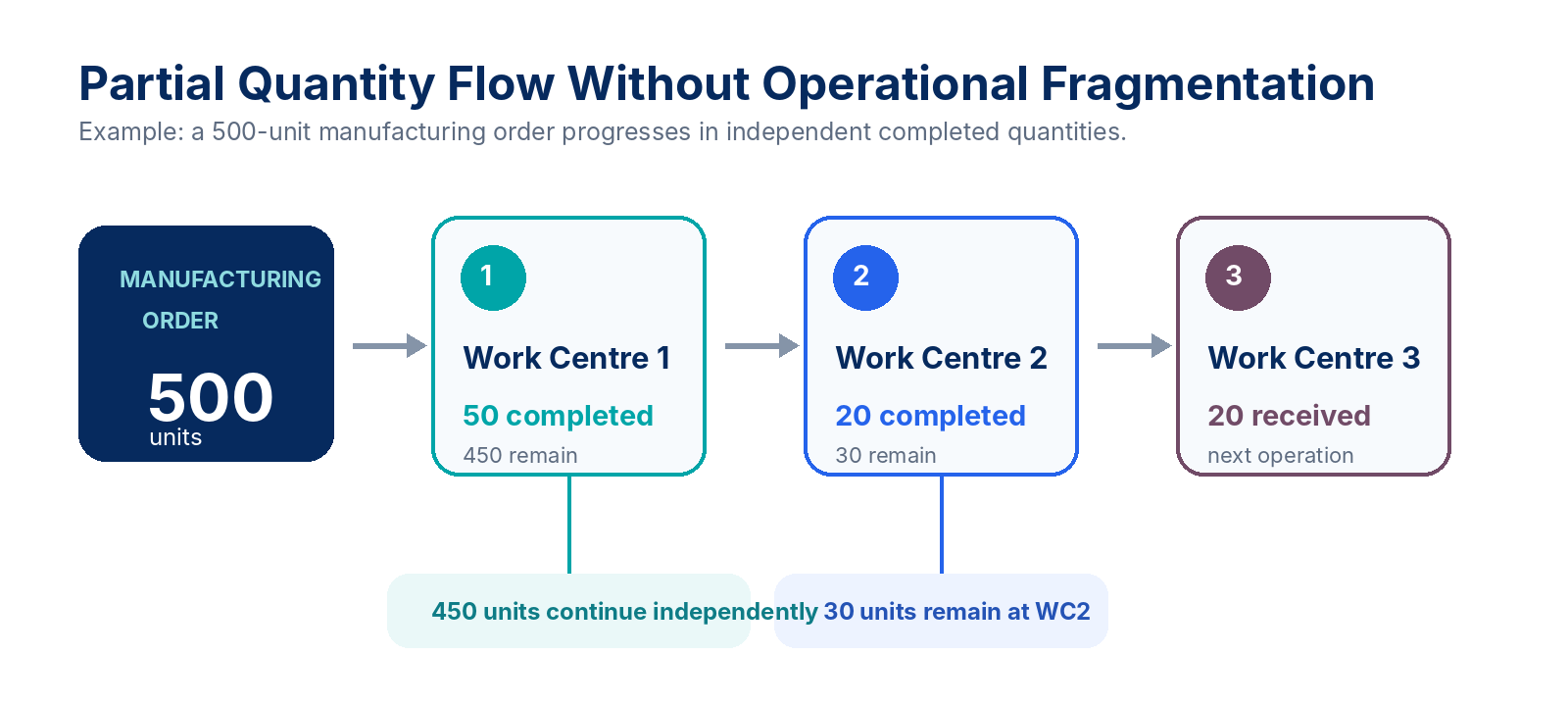
Completed quantities move independently between work centres while Odoo's native backorder structure remains managed in the background.
Operators access checklists, timesheets, BoMs, inspections and controlled manual raw-material lot selection directly within the execution flow.
RFQs, receipts, heat numbers, mill certificates, incoming QC and supplier non-conformance actions remain linked to the originating requirement.
Vendor delivery, processing status, return, inspection, NCR and onward routing are integrated without distorting work-in-progress valuation.
Engineering, quality, commercial and production documents, order discussions and customer lifecycle visibility are connected to the same records.
For a 500-unit order, Work Centre 1 can complete 50 units and immediately pass them forward. Work Centre 2 may complete only 20 of those units, allowing 20 to reach Work Centre 3 while the remaining quantities continue independently.
This reduces operational dependence on manually managed backorders and improves work-in-progress visibility, work-centre utilisation, finished-goods availability and support for partial delivery.
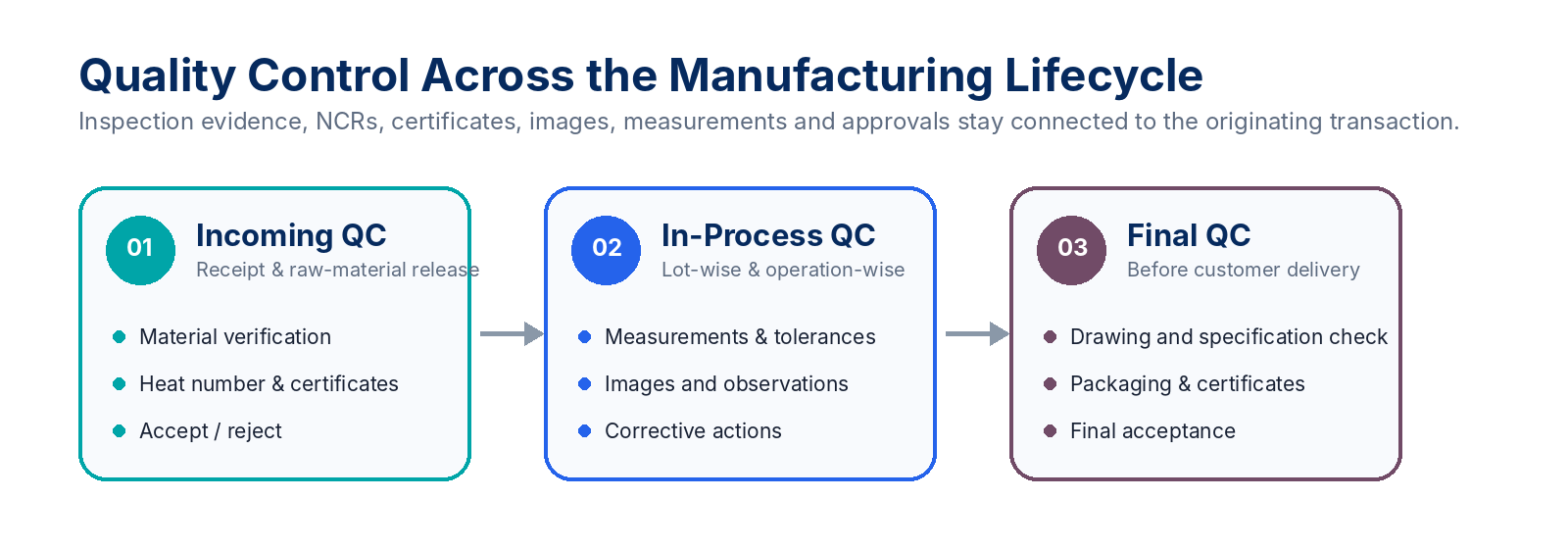
Incoming quality verifies material, quantity, dimensional requirements, certificates and heat numbers. In-process inspections record operation-level measurements, tolerances, images, observations and corrective actions. Final quality confirms customer specifications, drawings, documentation, packaging and certificate requirements.
Authorised operators can select the exact raw-material lot consumed, supporting traceability by heat number, batch, lot and mill certificate.
Coating, heat treatment, painting, plating, anodising, surface finishing and specialised testing become controlled steps within the manufacturing route.
The system creates the vendor delivery, tracks quantities under processing, receives the same partially manufactured components, initiates inspection and transfers approved quantities to the next operation.
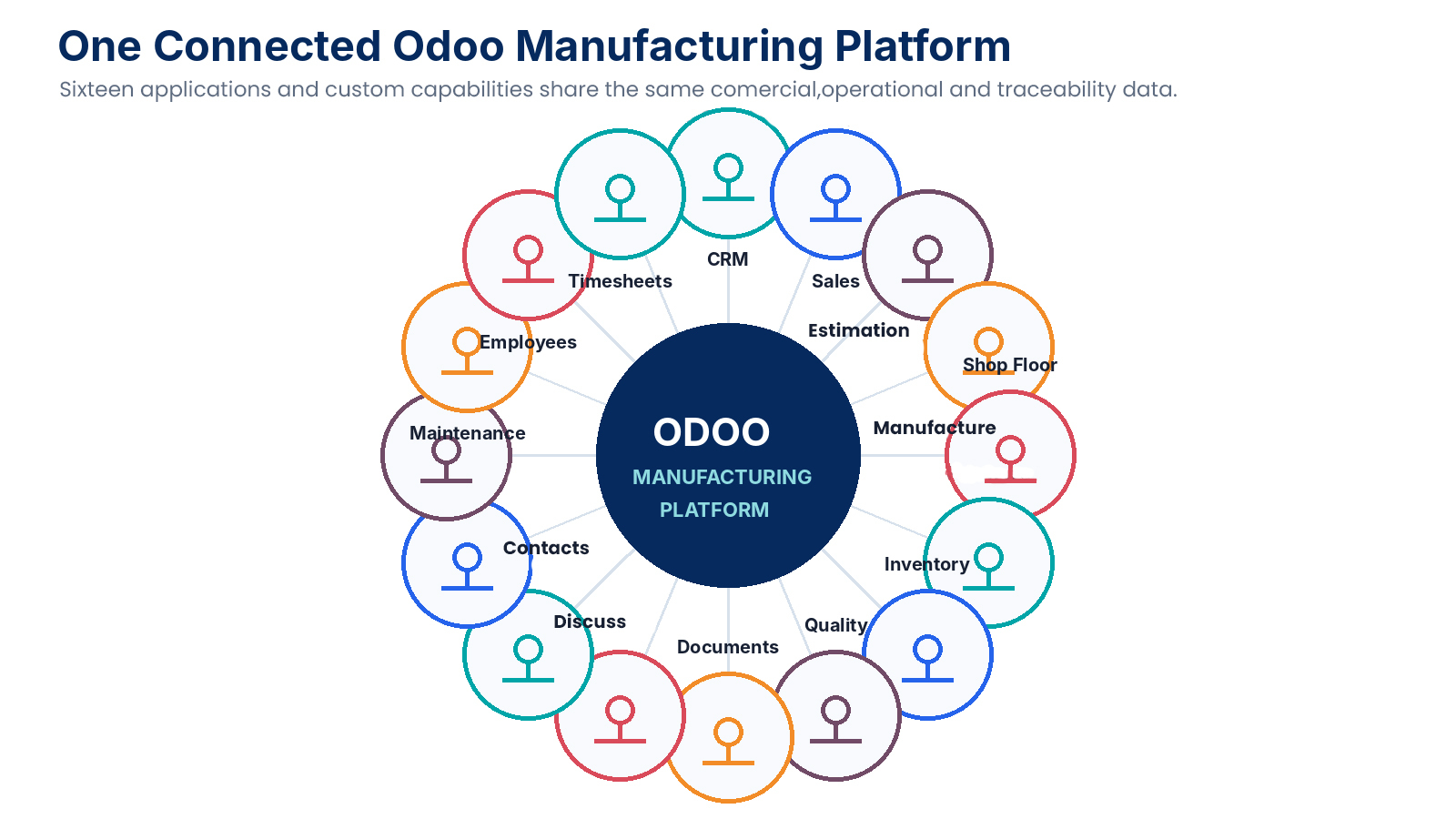
The client replaced disconnected calculations and records with one coordinated manufacturing platform.
Reusable quantity-based costing reduced quotation preparation effort and manual calculation errors.
Approved orders automatically create or update the manufacturing, BoM, document, CRM, discussion and acknowledgement records.
Independent quantities progress through operations with improved WIP visibility and less manual backorder management.
Available finished quantities can ship before the complete manufacturing order is finished.
Vendor, purchase order, receipt, raw-material lot, manufacturing order, finished product and delivery remain connected.
External processing costs and quantities are tracked without incorrectly inflating inventory.
Vendor failures remain linked to receipts, lots, inspections, corrective actions and supporting documents.
Drawings, work instructions, certificates, inspection reports, agreements and delivery records form a single source of truth.
Production, quality, warehouse, purchasing, accounts, sales and management communicate against the relevant order.
The implementation connected sales, production, purchasing, quality and service around one traceable order lifecycle.
client-reported manufacturing throughput improvement
incoming, in-process and final quality control
customer enquiry through delivery and invoicing
independent partial quantities across work centres
This case study demonstrates how Odoo can be extended beyond standard manufacturing functionality for complex, high-precision, custom and made-to-order production environments.